
Looking for a reliable, mid-size propane vertical smoker that gives you solid smoking results without complicated electronics?
This image is property of Amazon.com.

Quick Verdict
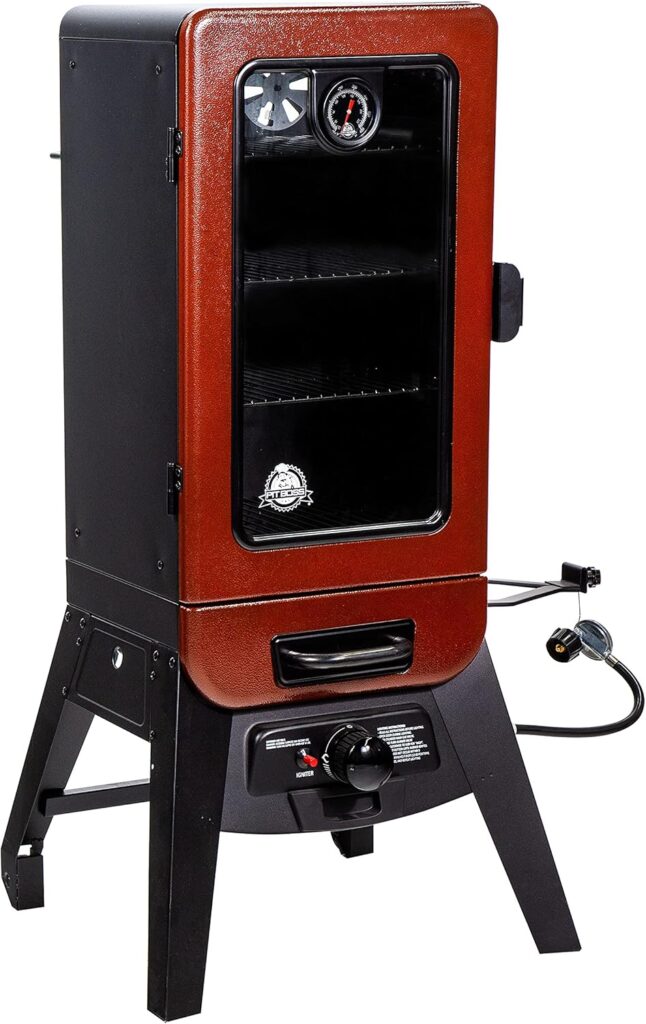
You’ll find the Pit Boss 3-Series Gas Vertical Smoker, Red Hammertone – 10773 is a strong option if you want an easy-to-use propane smoker that balances capacity and convenience. It’s designed to give you consistent low-and-slow performance with a compact footprint and straightforward controls.

What You Get in the Box
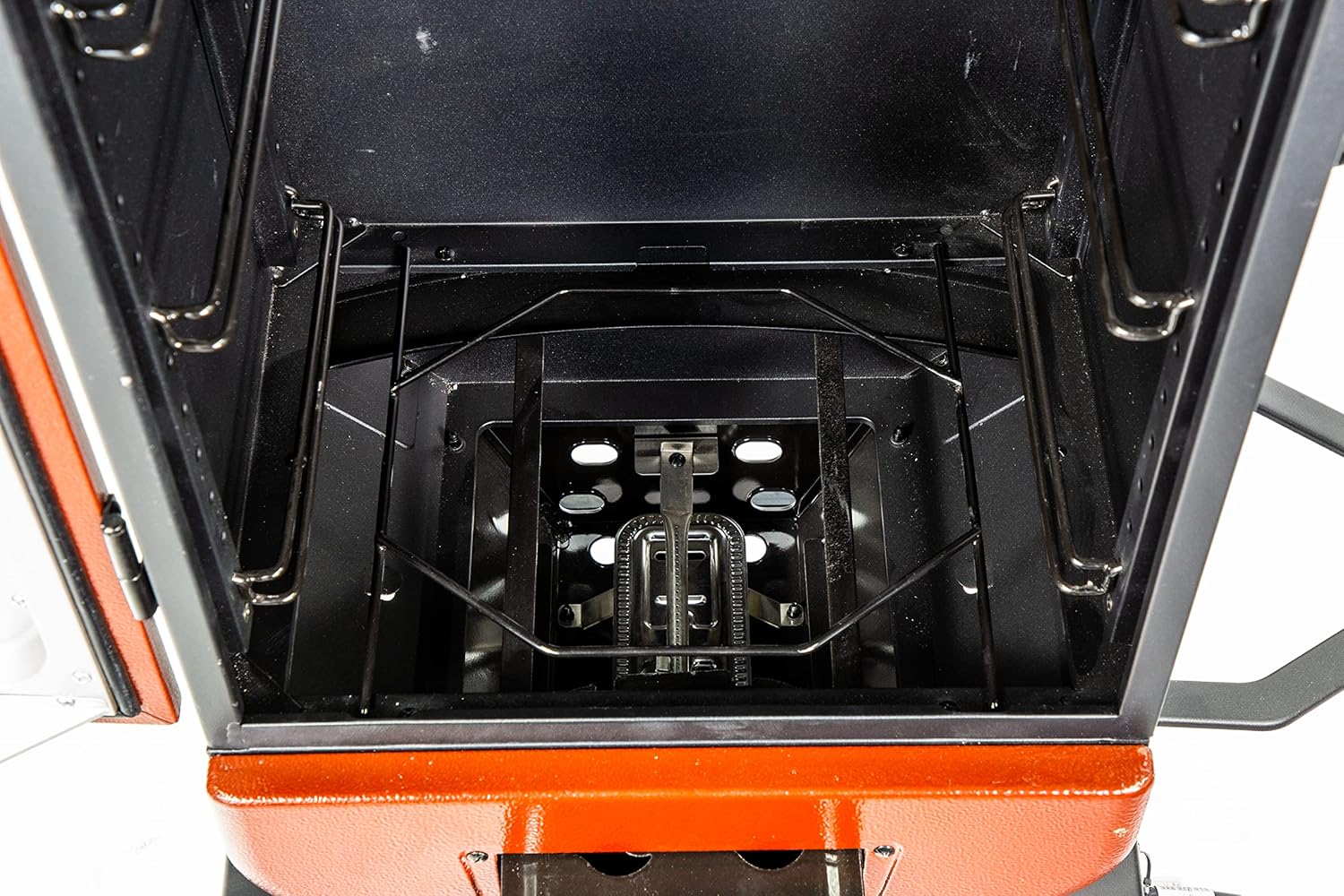
When you unpack the Pit Boss 3-Series Gas Vertical Smoker, you’ll find the main cabinet, four racks, burners, and the external wood chip tray and ash removal components. The unit also includes a front-access grease drawer and basic assembly hardware, so you can start using it shortly after setup.
Product Specifications
This table breaks down the most important specs so you can quickly compare features and capacity. You can scan this to see if the size, temperature range, and fuel type match your needs.
| Specification | Detail |
|---|---|
| Product Name | Pit Boss 3-Series Gas Vertical Smoker, Red Hammertone – 10773 |
| Cooking Area | 880 sq. inches |
| Racks | 4 racks, each 14.75″ x 12.25″ |
| Temperature Range | 100°F – 320°F |
| Burners | Dual valve / dual burner system |
| BTU | 12,500 BTU |
| Ignition | Piezo ignition |
| Fuel Type | Propane |
| Special Features | External wood chip and ash removal; front-access grease drawer |
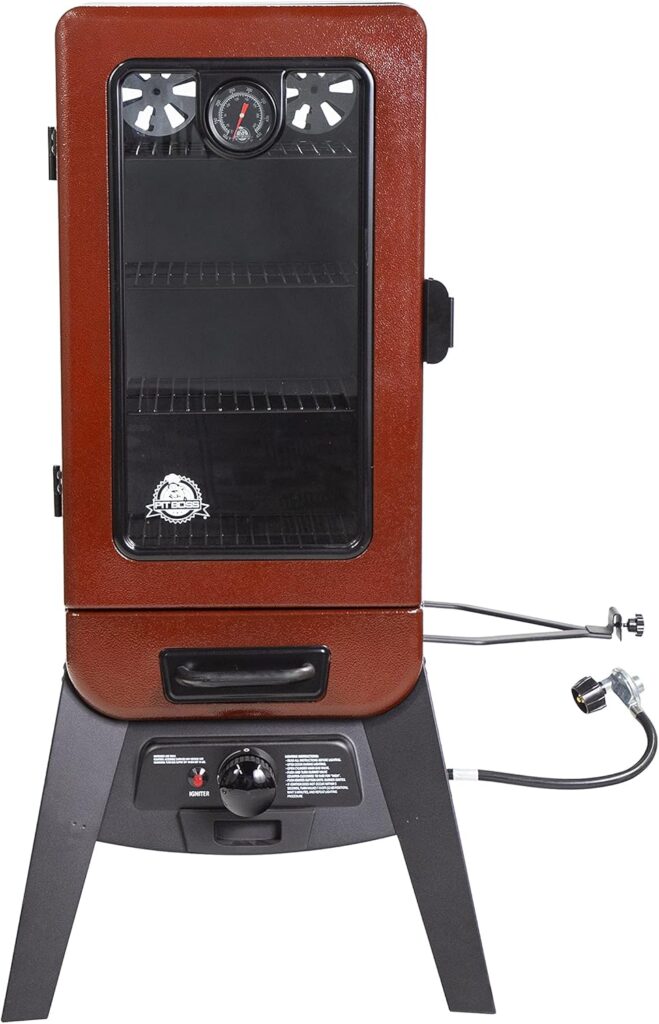
| Viewing | Large viewing window with professional heat indicator |
| Mobility | 2 rear rolling wheels |
| Seal | High-temp door seal to retain optimal cooking temperatures |
| Finish | Red hammertone |
Key Features Overview
You’ll want to pay attention to the features that affect daily use: cooking area, temperature control, wood chip access, and build quality. The Pit Boss 3-Series packs practical features that make smoking convenient whether you’re starting with pulled pork or trying smoked fish.
Cooking Area and Racks
The smoker gives you 880 square inches of cooking area spread across four racks that measure 14.75″ x 12.25″ each. This layout is convenient for cooking several items at once or arranging different meats and vegetables on separate racks for better smoke circulation.
Temperature Range and Control
You can set temperatures between 100°F and 320°F, which covers classic low-and-slow smoking, gentle roasting, and mild braising. The dual valve system helps you fine-tune heat levels, and the range is wide enough for most smoked recipes you’ll use at home.
Dual Valve / Dual Burner System
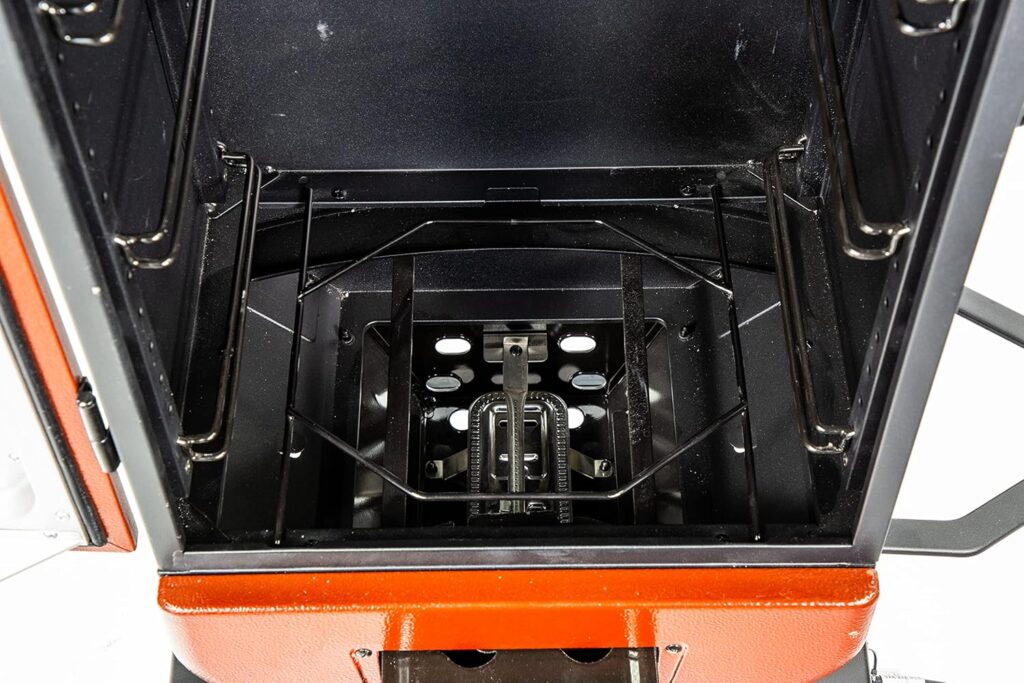
The dual valve and dual burner configuration gives you flexible control over heat distribution and fuel economy. You can run one burner for longer low-temperature smokes or both for higher temps and shorter cooks, which makes adapting to different recipes straightforward.
Ignition and Fuel
The smoker runs on propane and uses a Piezo ignition for reliable start-ups without batteries or matches. Propane makes this unit portable and simple to refuel, and Piezo ignition is a low-maintenance, easy-to-use method for lighting burners.
External Wood Chip and Ash Removal and Front-Access Grease Drawer
You’ll appreciate the external wood chip access that lets you add chips without opening the door and losing heat. The removable ash tray and front-access grease drawer make cleanup less messy, so you can focus more on cooking and less on scrubbing.
Large Viewing Window with Professional Heat Indicator
The large viewing window lets you check progress without opening the smoker door, and the professional heat indicator gives you a quick read on internal conditions. That visibility helps you maintain temperature stability and avoids unnecessary heat loss.
Mobility and High-Temp Door Seal
Two rear rolling wheels make it easier to move the unit around your patio or storage area, and the high-temp door seal helps maintain consistent internal temperatures. The tighter seal matters for holding low temps over long smokes.
This image is property of Amazon.com.
Performance and Cooking Results
You’ll find actual cooking performance is what defines a smoker, and this Pit Boss aims to deliver consistent, predictable results at a reasonable price. The smoker performs well for many types of meats and accommodates multi-rack cooking.
Smoking Low and Slow
The low end of the temperature range—around 225°F—is ideal for classic smoking jobs like brisket, pork shoulder, ribs, and whole chickens. You can maintain steady temperatures for hours with minimal adjustment, and the external wood chip feeder helps you keep smoke going without opening the door.
Reverse Searing and High-Heat Use
Although the top temperature is 320°F, that’s adequate for finishing meats or doing low-temperature reverse sears after smoking at lower temps. You won’t reach the searing hotspot of a gas grill, but the higher range is useful for bringing meat to finishing temps or evaporating excess moisture.
Temperature Stability
Temperature control is consistent enough for most enthusiasts. The dual burners give you options for steady heat; you’ll still need to monitor wind and ambient temperature during long smokes, but the high-temp door seal and solid construction reduce major fluctuations.
Ease of Use and Setup
You’ll be able to get the smoker running without technical expertise, and the controls are straightforward. From assembly to first smoke, the learning curve is relatively gentle for home cooks.
Assembly
Expect to spend an hour or two assembling the smoker, depending on your experience and tools. The instructions are straightforward, and most parts are pre-drilled and labeled so you won’t need advanced skills to get it ready to use.
Fuel and Wood Chip Use
You’ll connect a standard propane tank and use the Piezo ignition to light burners. The external wood chip box is easy to refill and allows you to add wood during cooks without opening the door and losing heat, which improves smoke consistency and reduces interruptions.
Cleaning and Maintenance
The front-access grease drawer, removable ash tray, and porcelain-coated components make cleanup reasonably simple. A routine wipe down and occasional deep clean will keep the smoker working well; you’ll want to empty the ash and grease drawers after heavy use to avoid flare-ups and odors.
This image is property of Amazon.com.
Build Quality and Design
You’ll notice the Pit Boss 3-Series balances durability with affordability, offering a solid finish and components that match its price point. The red hammertone finish adds visual appeal and resists fading and wear during routine use.
Materials and Finish
The smoker uses porcelain-coated stainless steel burners and a painted cabinet finish, which both help resist rust and wear. The porcelain coating on the stainless-steel burners simplifies cleaning and increases longevity compared with bare metal components.
Size, Footprint, and Storage
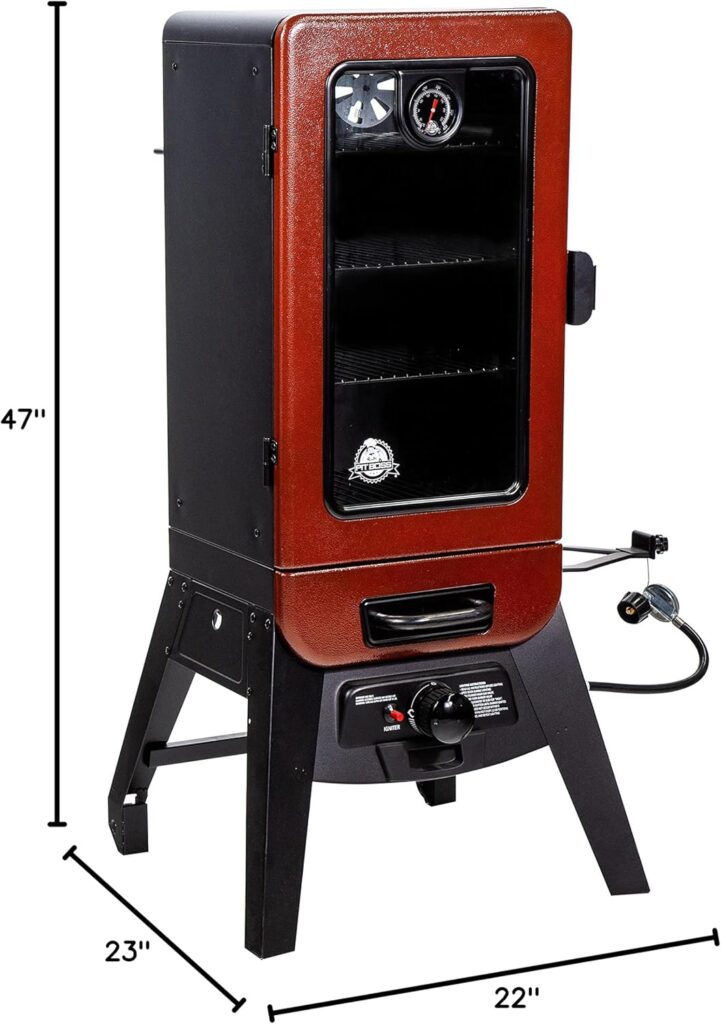
This smoker has a compact vertical footprint that fits smaller patios or decks while still offering 880 sq. inches of cooking area. You’ll gain significant cooking capacity without requiring the space of a full-size offset smoker or large pellet grill, and the two rear wheels make it easier to reposition.
Comparison with Similar Models
You’ll want to compare the Pit Boss 3-Series to other propane vertical smokers or similar gas smokers in the same price range. Compared to basic single-burner units, the dual-burner layout delivers more flexibility and a bit more heat. Versus electric vertical smokers, propane gives you higher max temps and a quicker heat-up time, though it lacks the fine digital control of electric models.
Pit Boss 3-Series vs Single-Burner Gas Smokers
The 3-Series wins on capacity, temperature range, and control due to the dual burner setup. Single-burner models tend to be simpler but offer less temperature control and slower recovery after opening the door.
Pit Boss 3-Series vs Electric Vertical Smokers
If you prioritize portability and propane fuel, the Pit Boss is a better fit. Electric smokers may give you more precise digital control and consistent low temps, but propane provides quicker heat-up and easier use for weekend cooking without power access.

This image is property of Amazon.com.
Cooking Capacity and Rack Management
You’ll have four racks to use, and the 14.75″ x 12.25″ rack dimensions give you flexibility for arranging meat, fish, and veggies. You’ll want to plan rack placement to avoid overcrowding and ensure even smoke flow.
Rack Placement Tips
Arrange larger cuts like brisket or pork shoulder on a lower rack for steadier heat and place smaller items higher to avoid overcooking. Frequently used layouts include one full rack for brisket flats and mixed racks for ribs and sausages.
Multi-Item Cooking Strategy
If you cook several different items at once, rotate racks during long smokes to even out heat exposure. You’ll also want to group similar cook times and temperature requirements together to avoid juggling too many adjustments.
Smoke Flavor and Wood Choice
You’ll control smoke flavor primarily through wood type, chip size, and how often you add chips through the external tray. The Pit Boss supports a wide range of mild and robust wood flavors.
Recommended Woods and Uses
Use fruitwoods like apple or cherry for poultry and pork, and try hickory or oak for a stronger beef smoke profile. You’ll want to avoid over-smoking delicate fish or vegetables with heavy woods like mesquite unless you prefer a bold flavor.
Managing Smoke Intensity
To keep smoke subtle and controlled, use smaller wood chip amounts and stagger additions every 30–60 minutes. For a heavier smoke profile, add more chips or use denser woods that produce more smoke.
This image is property of Amazon.com.
Accessories and Add-Ons
You’ll likely want a few accessories to get the most from this smoker. Common add-ons include a good thermometer, a meat probe, cast-iron grates, and a cover.
Must-Have Accessories
A quality digital probe thermometer helps you hit target internal temperatures with confidence, and heat-resistant gloves make rack adjustments safer. A cover will protect the finish when the smoker is not in use and extend its life.
Nice-to-Have Upgrades
Consider an added drip tray or a raised rack to increase flexibility for roasts and pans. You can also add a small smoker box for wood logs if you want longer burn times per wood addition, though the external chip tray works well for most cooks.
Cleaning, Care, and Maintenance Schedule
You’ll want a simple maintenance routine to keep your smoker performing well for years. Regular cleaning also helps prevent off-flavors and ensures safer operation.
Daily and Post-Cook Care
After each cook, empty the grease drawer and ash trays once they’ve cooled. You’ll also want to give racks a quick scrub to prevent heavy buildup that’s harder to remove later.
Seasonal and Deep Maintenance
Every few months, deep-clean racks and porcelain surfaces with warm soapy water and check burners for blockages. Inspect the high-temp door seal for wear and replace it if it’s no longer forming an effective seal.
Troubleshooting Common Issues
You’ll run into a few common issues regularly, but they’re usually easy to fix without professional service. Most problems tie back to fuel, air flow, or cleanliness.
Temperature Fluctuations
If temperatures swing, check for drafts, a damaged door seal, or clogged burners. You’ll often find that reseating the door gasket and clearing burner ports stabilizes heat.
Ignition Problems
If the Piezo ignition doesn’t work reliably, you can light the burner manually while you replace the ignition unit. You’ll also want to ensure the propane tank valve is fully open and the regulator isn’t blocked.
Pros and Cons
You’ll get a quick summary here to weigh the strong points against potential drawbacks. This should help you decide if the Pit Boss 3-Series fits your priorities.
| Pros | Cons |
|---|---|
| 880 sq. inches of cooking area with four racks | Top temperature limited to 320°F (no high-heat sear) |
| Dual valve/dual burner system for flexible heat control | Propane costs and tank management vs electric convenience |
| External wood chip tray for adding chips without opening door | Not as precise as digitally controlled electric smokers |
| Porcelain-coated stainless-steel burners for durability | Requires routine cleaning to avoid grease buildup |
| Large viewing window with professional heat indicator | Slight learning curve for multi-rack cooking |
| High-temp door seal for improved temperature retention | Wheels on back only — front stability requires lifting |
Who Should Buy This Smoker
You should consider the Pit Boss 3-Series if you want a propane smoker that’s easy to use, portable, and sized for family meals or small gatherings. It’s a good fit if you like classic smoky flavors and want more control than single-burner models without the complexity of electric units.
Best Use Cases
This smoker works well for you if you smoke brisket, pork shoulder, ribs, whole chickens, or multiple racks of sausages on weekends. It’s also a solid choice if you want something that’s portable and doesn’t require electrical hookups.
Situations to Reconsider
If you need super-high searing temps or precise digital temperature control for low-and-slow competition-level smoking, you may want to look at other options. Likewise, if you don’t like managing propane tanks, an electric or pellet smoker might fit better.
Tips for Best Results
You’ll achieve better outcomes by paying attention to a few practical tips that leverage the Pit Boss’s strengths. These will help you tighten temperature control, improve smoke flavor, and reduce time spent babysitting the cooker.
Preheat Properly
Give the smoker 20–30 minutes to preheat to your target temp before adding meat. You’ll avoid long recovery times and start the smoke cycle from a stable baseline.
Use a Quality Thermometer
Rely on an accurate probe thermometer rather than the smoker’s built-in gauge for internal meat temps. You’ll avoid overcooking and hit your desired doneness more consistently.
Manage Wood Chip Additions
Add chips in measured amounts every 30–60 minutes for steady smoke. That approach gives you consistent smoke flavor and minimizes bitter over-smoking.
Maintain Airflow
Don’t stuff the smoker full. Leaving some space around larger pieces encourages better smoke circulation and more even cooking across racks.
Sample Cooking Times and Temperatures
You’ll find the following starting points useful when planning cooks. These are general guidelines; always confirm doneness with a meat thermometer.
- Brisket (whole): 225°F for 1 to 1.25 hours per pound until internal temp hits ~195–203°F. Expect long cooks and occasional spritzing or wrapping as needed.
- Pork Shoulder: 225–250°F for approximately 1.5 to 2 hours per pound until internal temp reaches 195–205°F for pulling.
- Ribs (baby back): 225–250°F for 4–6 hours using the 3-2-1 (or 2-2-1) method depending on tenderness.
- Whole Chicken: 250–275°F for 2–3 hours until internal temp is 165°F in the breast and 175°F in the thigh.
- Sausages: 225–275°F for 1–2 hours depending on thickness, finishing to an internal temp of 160°F (or as specified for the meat).
Frequently Asked Questions
You’ll likely have practical questions before you buy or during early use. These FAQs address common concerns and offer straightforward answers.
Can I use this smoker without wood chips?
Yes. You can use the Pit Boss on propane alone for roasting or slow cooking without smoke. However, adding wood chips is how you get the classic smoked flavor.
How long will a propane tank last?
That depends on burn settings and cook length, but a standard 20 lb propane tank will typically last multiple long cooks if you manage burners carefully. For extended events, you may want a spare tank.
Is assembly difficult?
Assembly is moderate. If you’re comfortable with basic tools, you can assemble the smoker in an hour or two following the included instructions.
Can I leave the smoker outside year-round?
You can store the smoker outdoors but using a weatherproof cover is recommended for durability. Long-term exposure to rain and humidity can affect finishes and seals.
Final Thoughts
You’ll get a user-friendly propane vertical smoker that balances capacity, control, and convenience with the Pit Boss 3-Series Gas Vertical Smoker, Red Hammertone – 10773. It’s especially well-suited to backyard smokers who want reliable low-and-slow performance and easy wood-chip access without a heavy price tag. With straightforward maintenance and a few useful accessories, you’ll be smoking delicious meals consistently and with less fuss.
Disclosure: As an Amazon Associate, I earn from qualifying purchases.